What could be more Welsh than a male voice choir? Considered one of the symbols of Wales, the choral men’s singing groups flourished in Welsh coal mining towns during the 20th century, where they provided camaraderie to workers and free entertainment when the gruelling work day was done.
Though coal mining largely came to an end in Wales in the 1980s, the choirs did not fall flat, and today, singing in a male voice choir remains a popular pastime around the country, aiding in establishing Wales’ reputation as the “Land of Song”.
However, it might come as a surprise to learn that this staple of Welsh society has also struck a chord in destinations outside of Wales, with active Welsh male voice choirs operating in cities from Dublin in Ireland to Johannesburg in South Africa.
One of the most renowned of these choirs beyond the Cymru border is the London Welsh Male Voice Choir. The group has been meeting in the English capital for more than 100 years, bringing their own unique brand of Welsh choral singing to venues in the city and far beyond, while also pushing the boundaries of what a modern male voice choir can be.
Here’s an intro to the famous Welsh choir in the English capital.
A maestro named Merlin
Wales may already be associated with one famous Merlin (the sorcerer from Arthurian legend), but it was another Merlin who played a leading role in conjuring up a Welsh male voice choir in the English capital back in 1902.
Merlin Morgan, a talented pianist who’d moved to London from Aberdare in South Wales, was chosen by a group of Welshmen living in the English capital to serve as the first conductor for their burgeoning Welsh choir, with the goal of competing at national singing competitions. After only six months of rehearsals in the vestry of Charing Cross Chapel, the newly-formed choir took their first competitive win at the Mountain Ash Eisteddfod. Magic was clearly in the air.
From these early esteemed performances the choir has slowly established itself as a singing force in the English capital. Now based at the London Welsh Centre, where its one hundred or so members meet every Thursday evening, the choir travels far and wide to perform – often for charitable causes – at prestigious venues like The Royal Albert Hall and St David’s Cathedral. They can also be heard belting out hymns and arias at iconic sporting grounds like The Principality Stadium in Cardiff and the Stade de France in Paris.
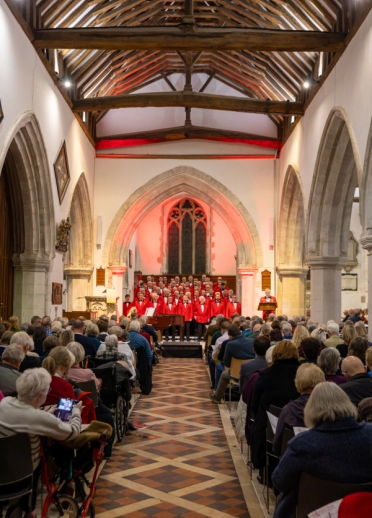
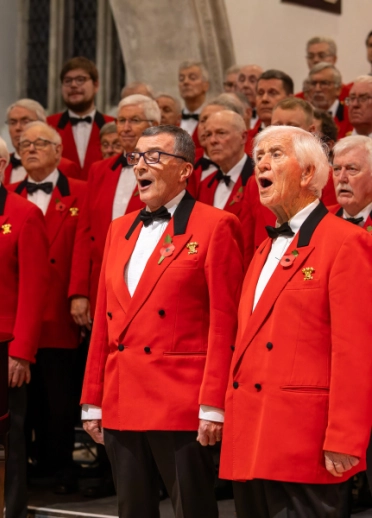
Then of course there was the choir’s performance during the Closing Ceremony of the 2012 London Olympic Games, an event believed to have been watched by more than a billion people around the world.
But each member of the choir has their own personal highlights, as David Jones, who joined the choir in the 1970s, and now serves as its chairman, can attest.
‘One of my first concerts was in Beverley Minster [one of the largest parish churches in the UK] in Yorkshire in May, 1978. I’ll never forget we sang the Pilgrims Chorus [a song from the opera Tannhäuser], and I could just feel the hair on the back of my neck standing up. It was magnificent.
‘We also performed in a production of Under Milk Wood for the Prince's Trust charity in the presence of the now-British king, Charles III. It was directed by Sir Anthony Hopkins, who’d just finished filming on Silence of the Lambs. I remember he still had his short hair from playing Hannibal Lecter.’
The continuing draw of choral music
Firmly rooted in history and traditions, it might be hard for some to imagine a pastime such as choral singing thriving in a modern metropolis like London. But, when speaking to members, it’s clear the London Welsh Male Voice Choir is more than just about singing, as David, who lived in Oswestry (a town close to the Wales England border) before his move to London, explains.
‘Of course the music is important, because, first and foremost, we’re not a bad choir,’ he says. ‘But there’s a friendship. There's harmony in the singing and also on the social side. I’ve met so many interesting people over the years in the choir, and I’ve been seeing some people for 48 years now that I see every week.’
It’s not just the older generation of Londoners who enjoy gathering for a weekly singsong. Sam Hardy, who is 25, is one of the younger members of the choir. Initially from the North East of England, but with grandparents from North Wales, Sam joined the choir while at university in London and, along with the music, appreciates the supportive nature of the group.
‘I think for me, I joined the choir at a point in my life where I was away from home, and, though I’d made friends at university, I needed stability, as well as peers to look up to, and It's really provided that.’
From speaking to choristers in the London Welsh, it seems as if there’s something about the idea of gathering to sing, as miners in their villages did a generation ago, that almost serves as an antidote to the perils of 21st century life in a bustling capital. A vaccine against loneliness in the digital age, when social isolation is becoming an epidemic.
‘While playing for a sports team as a younger person often offers that social element, it can also sometimes breed a toxic environment,’ says Sam. ‘Here, we have a space where you can sing, drink, laugh, and also have really honest conversations about mental health, depression, loss, or whatever you’re going through. It’s like masculinity done the right way.’
Ripping up the rulebook
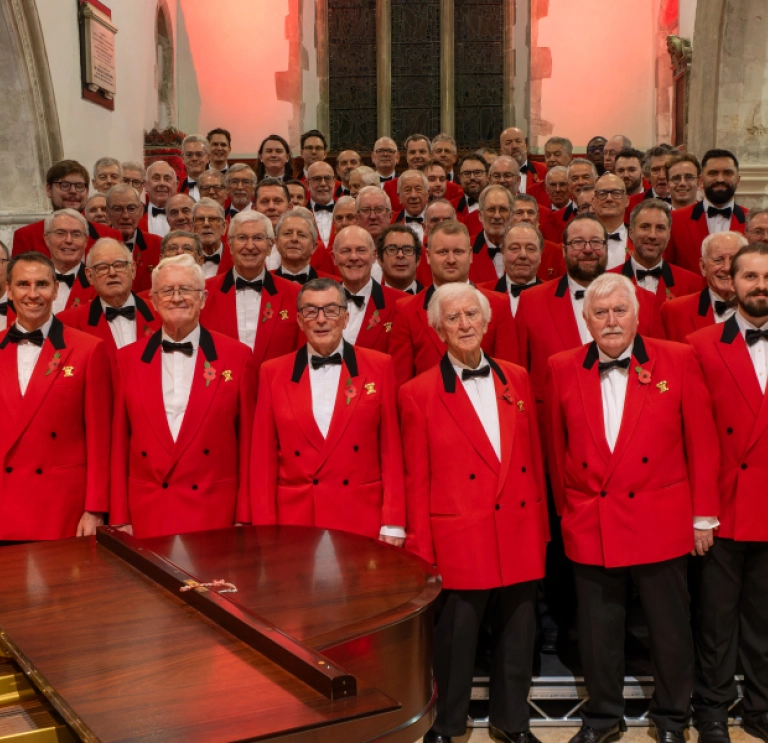
Anyone who has an interest in Wales or the Welsh language can join the London Welsh and the group’s historic customs, such as its signature red jackets and inclusion of traditional Welsh hymns in its concert repertoire, are engrained in its DNA.
However, the group has never been afraid to embrace modernity and step away from convention, as David has found throughout his tenure with the choir.
‘Not long after I joined in the 1970s, the choir released an album called Take Me Home,’ explains David. ‘That album was groundbreaking in a way, because the vast majority of the pieces on the album were modern songs that had only been released within the previous 15 years. No choir had ever done that before.’
This trend of fusing Welsh tradition with modernity continued in the nineties, when the choir backed pop group Take That during ten nights in front of sold-out crowds at Earl’s Court – despite the member of the choir who received the request not initially knowing who Take That were.
Today, the group continues to evolve and reinterpret the things a Welsh choir can do. A sentiment exemplified by the group’s recent collaboration with musician James Blake on the live version of his 2026 single Death of Love. Aided by a growing contingent of younger members, the choir has also embraced social media, with videos of performances racking up hundreds of thousands of views on TikTok. (They’re also on LinkedIn, as Sam proudly points out.)
But, the choir’s traditions and heritage remain integral to its continued success, as well as its appeal – even among the younger members of the group.
‘I’ve read stuff people have posted online about our outfits being old fashioned and outdated and things like that,’ says Sam. ‘But actually, speaking with the younger guys in the group, we love the legacy of the choir. When we’re singing these songs that were sung by settlers in Patagonia or during traditional Welsh funeral services, we feel that sense of history and it helps us feel connected to Wales.’
It turns out, even when it’s based in the heart of the English capital, a male voice choir can still manage to be the very Welshest of things.