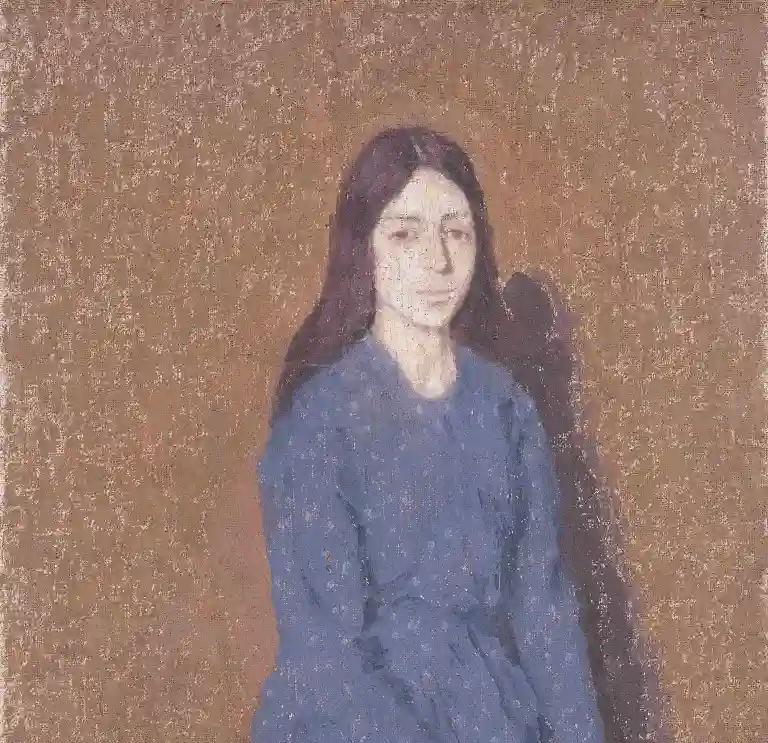
Gwen John the artist
Born in Haverfordwest, Pembrokeshire, in 1876, Gwen John was one of the first British women to receive a formal art education, moving from her childhood home in Tenby to study at the Slade School of Art in London. She later moved to Paris, after initially setting off on foot for Rome - a journey documented in letters to family and friends which saw the young John carrying painting equipment for many miles and sleeping under the stars.
After arriving in Paris, she became part of the vibrant artistic community, forging an independent path in a male-dominated art world. Her subtle portraits and interiors, muted tonal palette and contemplative style set her apart from her contemporaries as a quieter, yet radical voice of modernism.
In her private notes, Gwen John called herself “a seer of strange beauties.” She studied the world closely, often painting and drawing the same subjects many times, each time in a new way.
Despite John’s reputation for introversion and preference for solitude, she made many high profile connections in the art and literary world. At the Carfax Gallery in London in 1903, John and her brother Augustus exhibited together. Towards the end of her life her work reflected her new-found deep interest in Catholicism, reflected by her art which became more spiritual and solitary.
From 1904 until his death in 1917, Gwen John worked as sculptor Auguste Rodin’s model and muse to fund her own art and the pair also became lovers. More than a thousand letters, currently in the Musée Rodin in Paris, document their intense relationship.
Her connections have historically seen her viewed through the prism of these male relationships rather than as an artist in her own right but in a new exhibition led by Amgueddfa Cymru – Museum Wales, Gwen John: Strange Beauties, the focus is firmly shifted back to John’s work and artistic legacy.
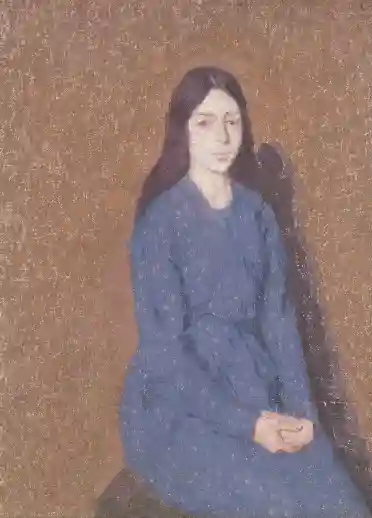
Gwen John the influencer
One hundred and fifty years after her birth, the creative influence of Gwen John continues to resonate worldwide. Designer and creative director at Dior, Jonathan Anderson is a collector, citing her palette and emotional depth as key influences on his collections.
The Manic Street Preachers have drawn on her life and legacy in their music (The Secret He Had Missed), and photographer Laura Pannack cites early 20th-century female painters including John, as key influences on her palette and quiet, painterly approach to portraiture.
Designer Phoebe Philo’s understated aesthetic is often compared to Gwen John’s restrained sensibility, while painter Celia Paul has openly reflected on John’s impact in her book Letters to Gwen John.
And 300 year old luxury paint company, Little Greene, has chosen and provided tonal shades to specifically echo John’s palette in a partnership for the latest exhibition of her work.
Gwen John in North America
The avid modern art collector John Quinn promoted John’s art throughout the United States after he met her in 1911. The New York lawyer amassed one of the most important collections of European modern art in America. He also introduced Gwen John to the American poet Jeanne Robert Foster and the pair became lifelong friends. Letters show Foster, who also as a literary editor in New York, was fascinated by the simplicity of the artist John’s way of living in Paris, which was often reflected in her paintings.
Now, a landmark exhibition of her work, Gwen John: Strange Beauties, will launch at National Museum Cardiff before touring internationally to the Yale Center for British Art and the National Museum of Women in the Arts in Washington D.C.
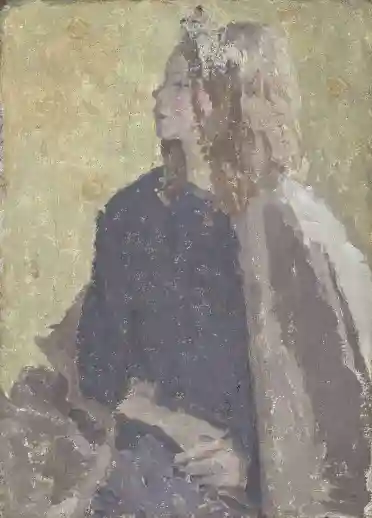
The exhibition reveals the depth and range of John’s practice, from her early works in Wales to her later paintings inspired by British and French modernism, religious devotion and her surroundings in Meudon, near Paris.
Speaking about Gwen John, Strange Beauties in North America, Martina Droth, Paul Mellon Director, Yale Center for British Art, said: ‘The Yale Center for British Art is thrilled to be part of this innovative exhibition, reframing Gwen John’s artistic practice for contemporary audiences for the first time in more than four decades. This groundbreaking retrospective presents a timely opportunity for the YCBA to share its extraordinary paintings and drawings made by John. The YCBA’s founder, Paul Mellon, was particularly drawn to Gwen John’s meditative works, assembling the largest public collection of paintings and drawings by the artist outside the UK. It is a privilege to be the first venue in the United States to host this exhibition dedicated to Gwen John as the museum commemorates its fiftieth anniversary.’
The National Museum of Women in the Art, in Washington DC will also be hosting the exhibition. Director Susan Fisher Sterlin said: ‘We are honored to collaborate with Amgueddfa Cymru in bringing Gwen John’s body of work to light. We have long admired John’s quiet brilliance and, as the first major museum in the world solely dedicated to women in the arts, we look forward to bringing her art to prominence when the exhibition travels to Washington, D.C.’