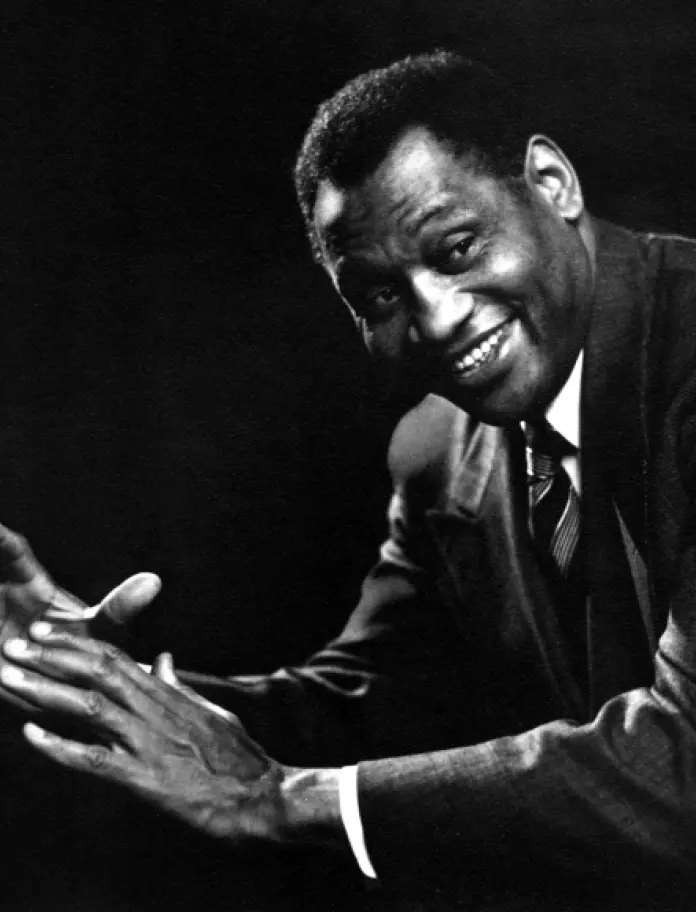
Baritone singer, Shakespearean actor, Hollywood star, American football player, lawyer, scholar, and political activist - Paul Robeson was a renaissance man and polymath.
Widely regarded as the first Black movie star, a pioneer who broke down barriers and paved the way for other African American actors including Denzel Washington and Sidney Poitier, yet few are aware of Paul Robeson’s connection to Wales and his lifelong support for and affinity with Welsh miners.
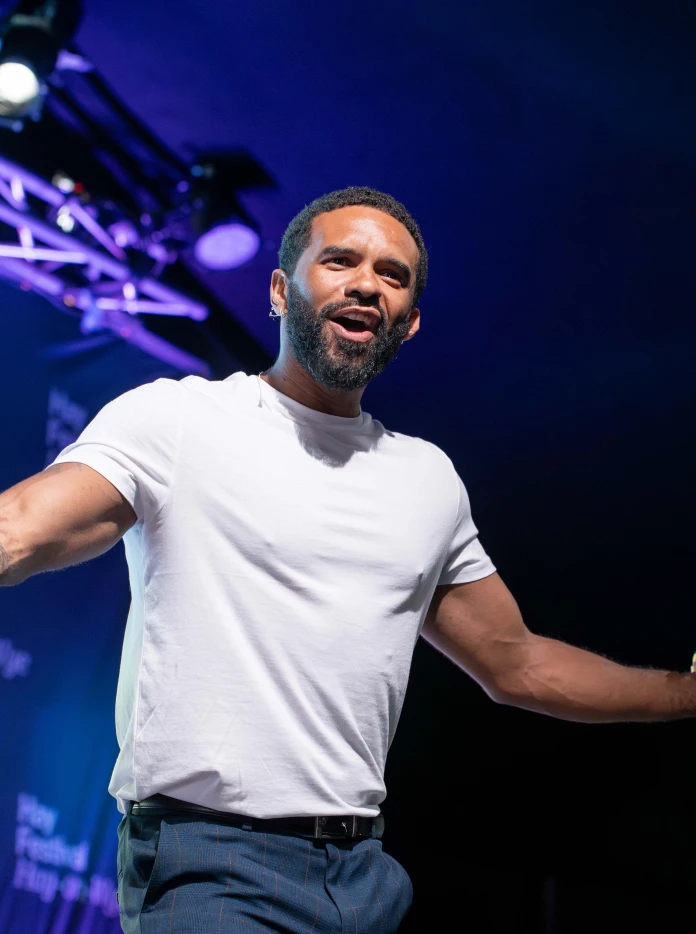
We spoke to poet Alex Wharton, the Children’s Laureate for Wales from 2023 to 2025 to discuss his poem ‘Diolch Mr Robeson’, part of a series of Creative Responses commissioned by Cadw and Literature Wales with the aim of commemorating a wider range of people and to recognise the diverse ways in which they contributed to the Wales we see today.
Q: Tell us a little about yourself. Where are you from? What do you do?
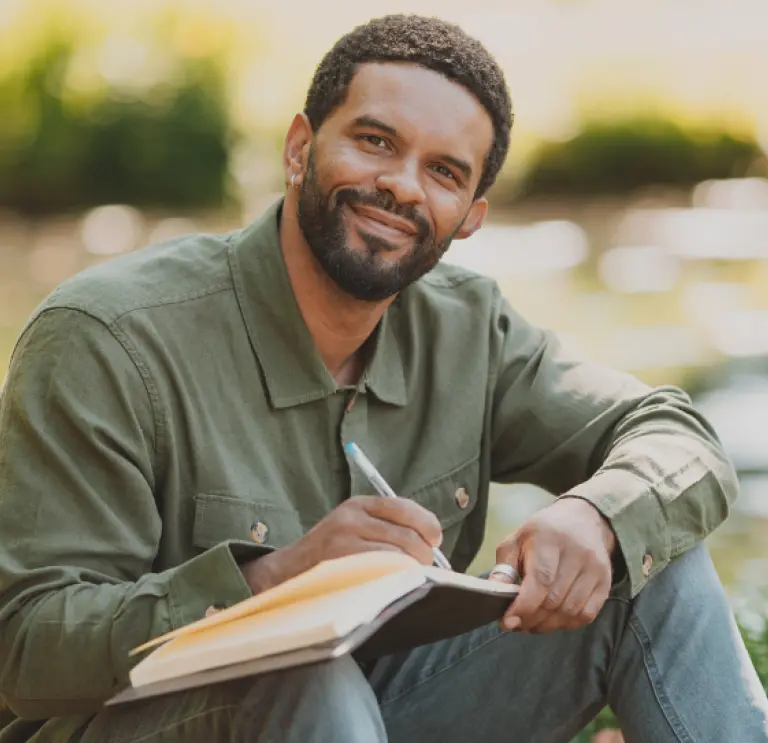
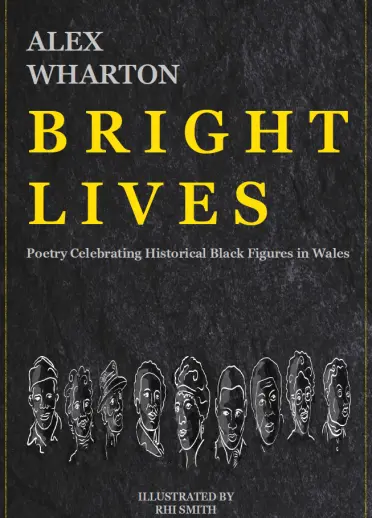
My name’s Alex Wharton and I am a full-time writer, poet, author, singer, and songwriter following an earlier career in construction. I’m the father of two sons and make my home and career in Pontypool, a post-industrial mining town in the South Wales valleys. My mam and dad are both Welsh but my paternal grandparents are from Saint Kitts and Nevis in the Caribbean and came over with the Windrush generation that immigrated to the UK in the 1950s and 1960s. I’m currently working on a book, ‘Bright Lives’, celebrating influential Black figures that helped shape Welsh history. In 2026 I’ll be touring schools, colleges and universities in North America, beginning in Georgia.
Q: Why do you feel it was important to share Paul Robeson’s story?
Paul Robeson is such an inspirational human being. Although I was aware of him, I hadn’t fully appreciated his impact on Wales or the strength of his bond with Welsh miners until I began to research and learn more about his life. Through my poem, I wanted to honour this incredible Black figure and showcase Robeson’s influence in Wales. I wanted to reach people who live in Wales or who are connected to Wales in some way, with the aim of sharing how rich and diverse its history really is. Paul Robeson is a person that everyone can be inspired by, not only now but for generations to come. His story shows so much wisdom, so much passion, and an unwavering commitment to justice and equality. It truly is a great example of the power of the human spirit.
Q: How did you balance Robeson’s artistic work with his activism in your poem?
The story of Paul Robeson is inherently political but it’s also deeply human. Here’s a man, an African American and the son of a freed slave, facing segregation in his own country, who was moved by the distant struggles of Welsh miners. Meeting those striking miners from Rhondda in 1929 really changed his perspective and seeing their struggles with class discrimination made him more even more politically driven. I think there's something very beautiful about how he was so eagerly welcomed by the people of Wales and he in turn embraced Welsh culture and communities with so much warmth. I wanted my poem to reflect this solidarity while also including the creative qualities that made him so remarkable. Black history is too often retold through the lens of struggle, but with ‘Diolch Mr. Robeson’ (Diolch is Welsh for Thank-you) I wanted to show the full positive picture of his life - the talent, the triumphs, the tribulations – and say thank you as a nation for standing with us, singing for us and reminding us that we’re far more alike than we are different.
Q: When exploring Robeson’s legacy, did you find parallels with your own background?
The town that I grew up in wasn’t very racially diverse, and that lack of representation influenced how I viewed myself and place in my community.
I think that’s why when I first saw the film ‘The Proud Valley’ it affected me so deeply. Paul Robeson was portrayed as a Black man in the Welsh valleys and not only was he welcomed and accepted, but his character shared a profound understanding with the miners. Seeing a black man portrayed as wise, heroic, and a symbol of pride and unity was really moving. Paul Robeson really embodied harmony and that’s something that I always aspired to, simply to connect with others and celebrate our humanity. We all carry our own hardships, don’t we? And Paul Robeson exemplified this truth, and I think his courage to stand firm and speak out will always be a source of inspiration.
Q: How did working on the poem about Paul Robeson influence the way you see your own artistic identity?
You know, my nan had this vinyl, ‘The glorious voice of Paul Robeson’ which she passed down to my mam, who then gave to me when I began researching for ‘Diolch Mr Robeson’ and just wow… I really think everyone should listen to it.
His voice is so wonderful and holds so much depth and emotion, it’s truly a testament to his talent. In my own art, my objective is to move people and be a positive outlet for people to learn, connect, and understand themselves and others. Listening to Mr Robeson’s voice reminded me of the power that art can have when it’s rooted in something authentic. That’s the kind of art I want to make, work that stays with people, allowing them to create their own meaning and find comfort when they need it. Music and art are universal, both transcend cultural boundaries and sometimes reach people in a way that words alone can’t. I think learning about how Paul Robeson used his art as a way to advocate for change and champion justice not only made me realise the responsibility I carry as an artist, but the potential my work has to inspire action and amplify unheard voices.
Q: What lessons do you think people can learn from Paul Robeson’s life?
Paul Robeson’s influence on Welsh culture and the wider world must be recognised, not only for his talents as a singer and actor but his commitment to championing social justice and encourage understanding. In every area of his life, Robeson strived for excellence, approaching every endeavour with courage, passion, and discipline. Though there are many, I think the biggest lesson that we can learn from Paul Robeson is to never underestimate our ability to inspire and uplift others. In a Welsh valleys community like mine, the biggest takeaway for young boys and men particularly could be to not to be afraid to strive for excellence and being the best they can be. By using our voices, whether through art or action, we can make a positive impact and build confidence and pride within our own communities.
- Learn more about Alex Wharton and his work
- Cadw and Literature Wales commissioned the poet Alex Wharton to research and write about a number of notable individuals. These pieces are the start of a journey to commemorate a wider range of people and to recognise the diverse ways in which they contributed to the Wales we see today.
- Read more CADWs creative responses.