Launched in the Welsh capital, Cardiff, in 2007, the Iris Prize is a competition, and accompanying week-long festival, focused around short films celebrating LGBTQ+ stories. It is known around the world, and has become a staple event on the British film calendar for moviegoers, attracting film fans from inside and outside of the LGBTQ+ community.
It is also wonderfully well named. Iris, of course, has connections to the eye, as well as the iris flower, a symbol of wisdom. But iris is also the name of a Greek mythological figure, who, along with serving – very aptly – as the personification of the rainbow, held an important role as a messenger.
This, ultimately, is what Iris is all about, bringing a vibrant array of funny, enlightening and inspiring stories from all over the world to Cardiff, where the festival, held annually in October, continues to be based.
Here’s an overview of the Iris Prize and its annual festival, an exciting, joyful event, which arrives each October, perfectly packaged.
Setting the scene
Like many great things, the Iris Prize was created in response to a moment of adversity.
In 2006, Berwyn Rowlands, from Ynys Mon (Anglesey) in North Wales, found himself facing redundancy from his Cardiff-based role as Chief Executive of Sgrîn, a media agency that supported and promoted the film sector in Wales. Rather than seeing this development as a major setback, he viewed it as an opportunity to focus on something he’d long been passionate about – creating his own film festival.
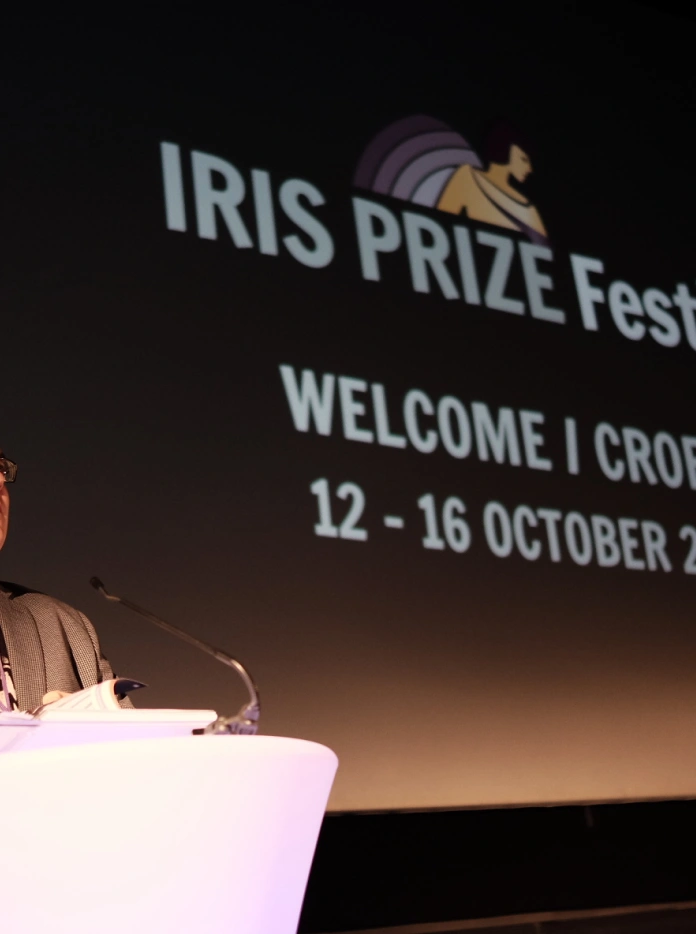
‘It was one of those wonderful moments where I decided I'm going to do what I want to do, which felt very exciting,’ he says. ‘I also wanted to challenge people’s perceptions of what they thought Wales was. After all, why couldn’t it be Wales that established the world's largest short film prize, which happens to be lesbian and gay?’
That question, and the general sense of intrigue surrounding the endeavor, helped to generate a buzz for the inaugural Iris Prize Festival in 2007, which, though small in scale (it’s said the attendees could be squashed into two mini buses), proved the event had a dedicated, engaged audience.
The first winner of the prize was the American director Dee Rees, for her short Pariah, which was later turned into a critically-acclaimed feature-length movie. The prize – then £20,000 worth of funding towards a future project – was used by the director to create the short Colonial Gods, filmed in Cardiff. This was the first of more than a dozen “Iris films” made by the winners of the Iris Prize, in collaboration with the organisation.
Rolling it on
Since that first festival in 2007, the Iris Prize has returned to Cardiff every year, growing in scope and ambition.
The festival has extended its run-time from two and a half days of screenings to a full seven day programme. New award categories have also been added, including awards for the best British short and best student short, and the overall prize for the winner of the main category now stands at £40,000 worth of funding for a new project. This makes the prize the largest short film prize in the world.
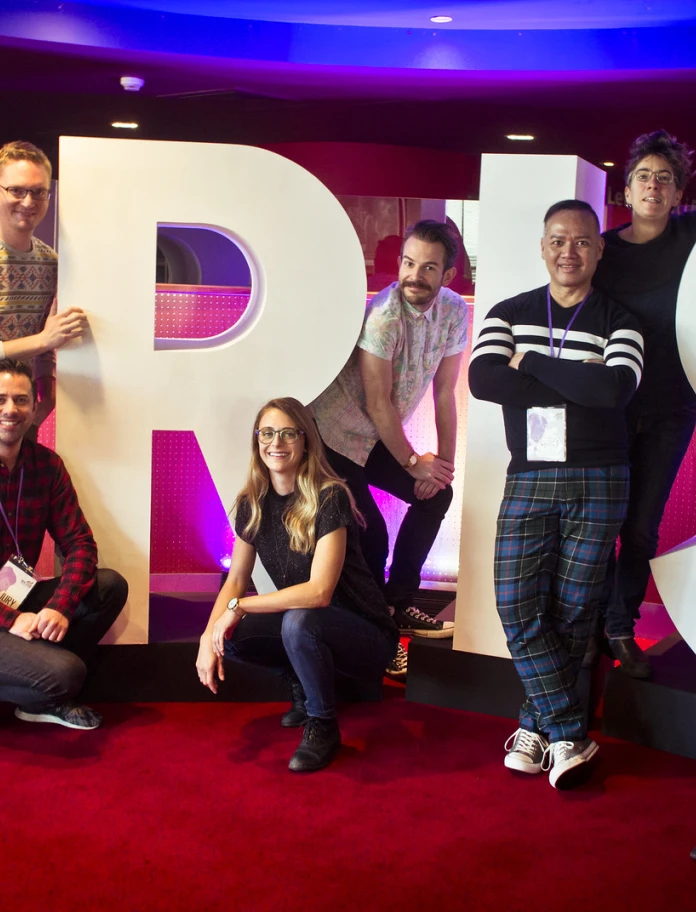
But according to Berwyn, who, along with being the festival’s founder, serves as its current director, some of the biggest advantages of Iris lie in the fact it hasn’t changed. The festival remains unwavering in its focus of unearthing amazing stories from across the globe and screening them in an event that is welcoming to everyone.
‘I’ve been to various film festivals, and I might be too old or too this or too that. You don't sort of fit in, and you feel like a bit of an impostor,’ says Berwyn. ‘But Iris is truly for everybody. One of the things I'm really excited about, which is still going strong, is that about thirty per cent of our audience do not identify as LGBTQ+. Some of our audience don't even know what a pronoun is!’
Creating space
That’s not to say Iris doesn’t work to alter perceptions and expand mindsets, but it does it through a method that Berwyn describes as “creating space”. Space for creativity, space for dialogue, space for exchanges of ideas, and space for individual growth.
‘I think we are very, very effective and successful at changing people's perceptions, at allowing people to think. But we do it with film, and through the spaces that Iris creates.’
The primary space, the festival, includes a seven day programme of shorts (which make up the shortlist for the prize), plus screenings of additional feature films and documentaries. Then there are the Q&A sessions with directors and screenwriters, industry events (providing advice to budding filmmakers from all backgrounds) and the legendary parties (where competing international directors have been known to face off in heated karaoke battles!).
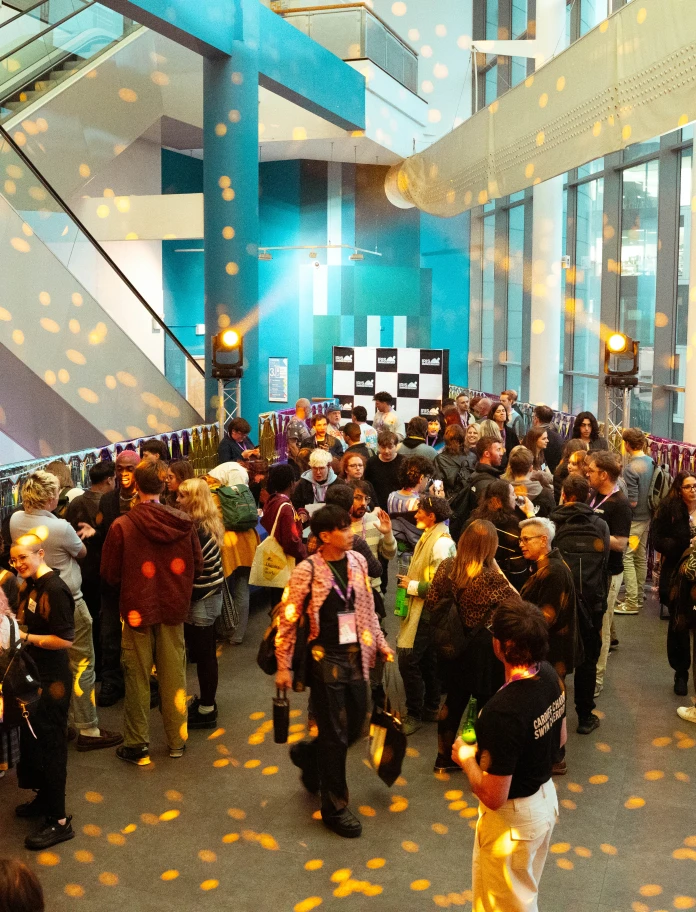
But Iris also creates different kinds of spaces for conversations around LGBTQ+ stories. One of these is through the festival’s partnership with Channel 4, which currently takes all fifteen of the shortlisted films for the Best British Short category and makes them available to stream on its website throughout the year. Another is through its wider advocacy role, sharing its films with other film festivals, and also hosting events in parts of the country where LGBTQ+ film venues may not be present.
A brilliant backdrop
The Iris Prize has always positioned itself as a British project, with an international outlook. It was, after all, nearly ten years before a British film maker won the top prize at the festival (Balcony by Toby Fell-Holden), with its early winners heralding from as far afield as Brazil and Australia.
However, Cardiff has always been its home, and the festival has incorporated the concept of celebrating “Cardiff Charm” into its identity.
‘I think Cardiff Charm is about being yourself,’ says Berwyn. ‘The city is small, but beautifully formed, with friendly people, and it’s very democratic. If you go out to a restaurant, as long as you can pay your bill and try not to fall down the stairs after drinking too much wine, then nobody bats an eyelid.’
It was the people of Cardiff who initially aided in getting the festival off the ground. Inspired by childhood experiences of his family hosting children from South Wales during the National Eisteddfod on Ynys Mon in the 1980s, Berwyn sought the aid of volunteers willing to provide accommodation to international film makers who’d been shortlisted for the prize. This meant creatives from countries across the world were being put up on sofas and spare rooms throughout the city during the festival, leading to some unexpected results.
‘It actually became very competitive in the early years,’ recalls Berwyn. ‘People would come to the festival proudly telling everyone that they had the winner staying with them last year.’
‘And then suddenly you maybe had straight fathers with children and people from right across the political spectrum, getting to know these film makers, coming to Iris with them, and becoming very aware of queer storytelling. And it’s like, how did that happen?’
That early sense of community has solidified into what the festival team refer to as the “Iris family”, and today a whole host of volunteers still sign up each year to play a role, whether that’s greeting guests at the venues or creating content for the festival’s social media pages. The festival also runs a membership scheme, putting on events to bring film lovers together throughout the year.
Cut to credits
Having now passed the twenty year mark, Iris continues to grow in strength and stature. The latest edition of the festival received a record number of submissions, while some countries have even started hosting dedicated events to select their nation’s entry for the competition.
Berwyn puts this growth in submissions down to a number of factors, including the democratisation of technology (people can, if necessary, now shoot films on their phones), and Iris’s own increasing allure as a competition filmmakers want to be a part of. But the trend is also tied to more overarching global issues.
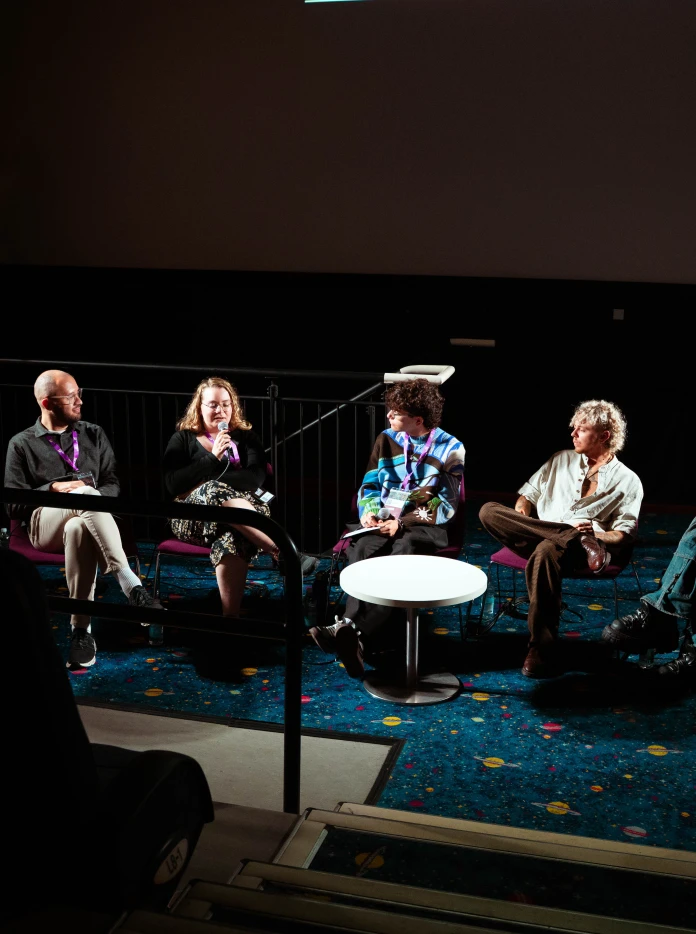
‘I think the world, for some people, feels like a very dark place at the moment, especially for the trans community,’ says Berwyn. ‘So I think there are more and more filmmakers who feel that they've got something to say, and they want to say it.’
Berwyn hopes the festival will continue to run as long as it’s needed, so its benefits can be felt by future generations. Along with wanting expanded audiences and the best possible screening facilities, he also hopes to see one other change in the festival’s future.
‘Sadly, we are still in double digits for countries where it's illegal to be gay,’ says Berwyn. ‘So, for us, we’re looking at a map of the planet and seeing large areas where no submissions come through, which means there are still stories that are not being shared.’
It is hoped one day Iris will be able to deliver stories from these places too.