The first time I heard the name “Owain Glyndŵr” was at university in West Wales – not during a lecture, but as part of a drinking game. In the game, every time a player pulled a jack from a pack of cards, set out in a ring on the table, the whole group would perform a spirited toast to Mr Glyndŵr’s memory.
Not often do 14th-century historical figures take centre stage during student nights out, but it is telling of the unique place Owain Glyndŵr occupies in the Welsh psyche that he tends to crop up in places you wouldn’t expect.
Though it took me until early adulthood to learn about the life of Glyndŵr, most Welsh people, young and old, know the tale of the man who rose up against the English monarchy and declared himself “Prince of Wales”, the last native Welshman to hold the title. In fact, in a 2003 Welsh Government poll of “100 Welsh Heroes”, Owain finished second, behind the creator of the NHS, Aneurin Bevan and one above superstar singer Tom Jones.
Outside of Wales, however, many are unfamiliar with the Welsh icon and his significance to the Welsh nation. Here’s a brief introduction to the story of Owain Glyndŵr, the law student turned rebel leader whose legacy can still be felt in Wales today, from theatre halls to student dorms.
Who was Owain Glyndŵr?
Owain was born in North Wales in the 14th century, arriving at the tail end of an especially turbulent period for the Welsh nation.
During the Middle Ages, Wales was not united as a single country as it is today, but was ruled by a series of Welsh monarchic families, who had control over various regions of land. Owain’s parents were descendants of the princes of Powys, in the north east, and Deheubarth, in the south west, making Owain of particularly potent noble blood.
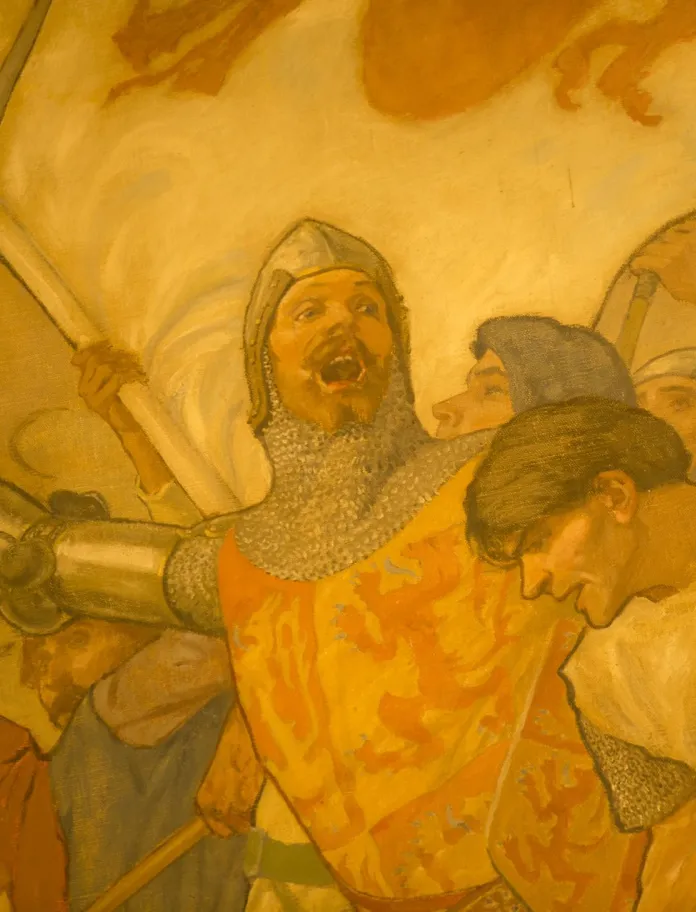
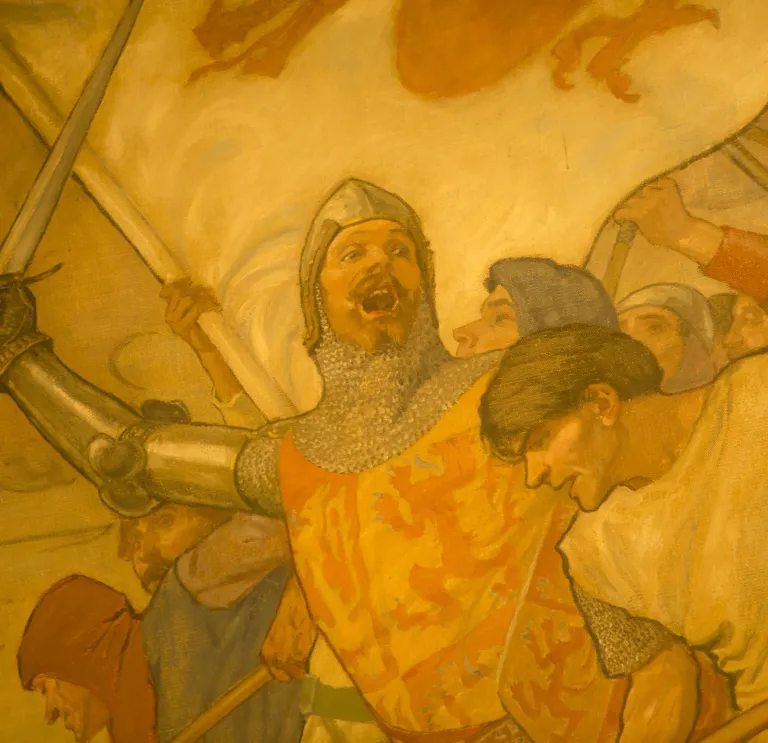
By the time Owain was born, however, all of the principalities were largely under the control of the English crown, following a ruthless conquest of Wales that began in earnest with the invasion by King Edward I in 1277.
Given his ancestry and the timing of his birth, it might seem obvious that Owain would be the man to rise up against English rule in Wales. But for the first half of his life, there was no indication of the revolutionary he was to become. He lived comfortably, married the daughter of a prominent royal judge and is thought to have spent time studying law in London. He even fought in campaigns for the English army against the French.
However, that all changed in the year 1400. Set against a backdrop of growing resentment from Welsh lords to the rule of the English monarchy, Owain found himself in a bitter dispute over land ownership with his neighbour Reginald Grey, Lord of Ruthin. When the English king, Henry IV, sided with Grey in the matter, the touchpaper was lit for what would become a decade-long uprising against the English crown.
The Glyndŵr Revolt
Though there were many leaders in the Welsh rebellion that began in 1400, Owain made himself the spearhead of the movement when he gathered friends and Welsh nobles to one of his residences, near the village of Glyndyfrdwy, and proclaimed himself Prince of Wales, a title last used by Dafydd ap Gruffudd, to whom Owain claimed distant ancestry through marriage.
Alongside bestowing this symbolic title upon himself, it’s thought Owain had a strong awareness of traditional Welsh legends and may well have styled himself in the image of Y Mab Darogan, a messiah figure from Welsh folklore who, it had long been prophesied, would one day drive all invading forces out of Wales.
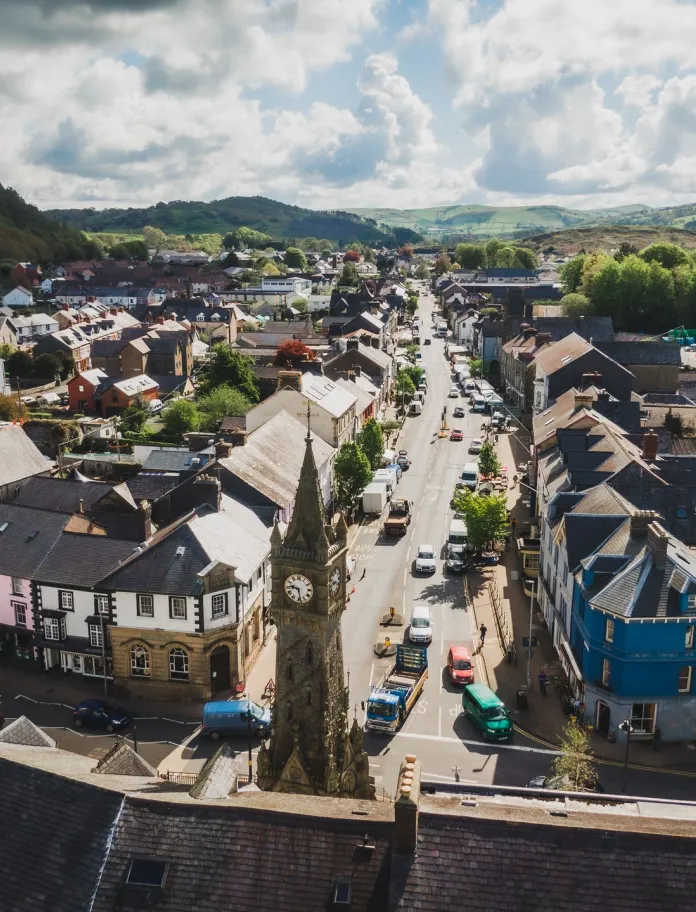
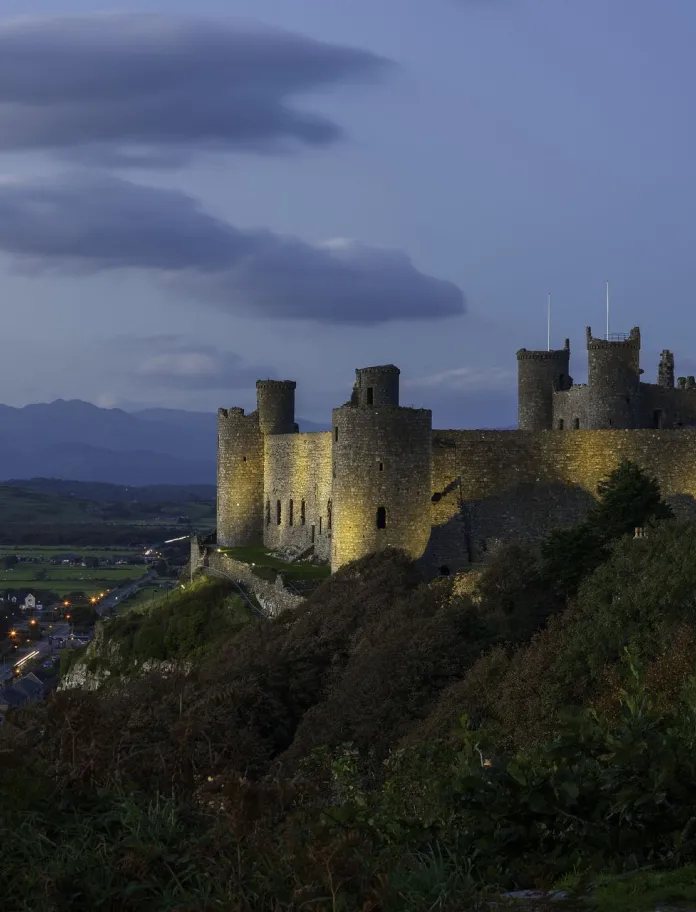
For the Welsh rebels, the revolt started well. Owain’s forces captured the castles of Harlech and Aberyswyth, and, in 1405, were reinforced by a battalion of French troops. Now controlling a huge swathe of Wales, Owain set out his terms for a full alliance with France, discussed plans for the creation of Welsh universities, and held a parliament in the town of Machynlleth. Tales of Owain’s ruthless reputation on the battlefield ignited terror in the English ranks, and, when an unexpected storm halted the advance of an English force, a rumour spread that the Welshman even possessed magical powers.
Yet, despite these early successes, it was for Owain and his followers that the storm clouds slowly began to gather. The French force made little impact, returning to France less than a year after they’d arrived, with no further assistance forthcoming. Around the same time, Owain’s brother died at the Battle of Pwllmelyn, and, in 1408, Aberystwyth Castle was taken back by the English. When Harlech Castle fell the following year, the revolt was essentially finished. Owain’s wife, son and two daughters were all captured and taken to the Tower of London, where they remained until their deaths.
Owain, however, defied capture and went into hiding, marking an intriguing conclusion to the life of the last Welsh-born Prince of Wales (a title that is now gifted to the eldest son of the British monarchy). Despite offers of lucrative rewards for information, none of Owain’s men betrayed him or provided insights into his whereabouts, illustrating the strength of support the ruler evoked from his followers – support that Owain still enjoys in Wales today.
The makings of a legend
Following his death, Owain transcended from the pages of history into the annals of myth, becoming a symbol of Welsh pride and resilience, as well as a continual source of inspiration for creatives.
Audiences didn’t have to wait long to see Owain reincarnated on stage, with his first dramatic appearance coming in Shakespeare’s play Henry IV, Part 1. First performed at the end of the 16th century, the play portrays Owain as wild and exotic, and references the myths about the Welshman having mystical powers.
In more recent times, Owain has appeared both in historical literature (Owen Glendower: An Historical Novel by John Cowper Powys, published in 1941) and fiction books (The Raven Boys by Maggie Stiefvater, published in 2012), as well as serving as the focus of a 2023 board game.
This interest in Glyndŵr shows no sign of waning. In 2026, an eagerly-anticipated production about The Glyndŵr Revolt, starring Michael Sheen, will premiere in the Wales Millennium Centre. Before then, Owain is also set to star in a new major video game (as well as its corresponding film adaptation), about modern mercenaries travelling back in time to fight the armies of England – with the help of machine guns.
Glyndŵr has also popped up in artwork and on stamps, and has given his name to Welsh pubs, sports teams and universities. There are even efforts by some to make 16 September, the date Owain is believed to have proclaimed himself as Prince of Wales, a national public holiday.
Places in Wales connected with Owain Glyndŵr
While Owain’s legacy lives on in the psyche of the Welsh public, it is also etched deeply into the country’s landscape.
A number of monuments have been erected to the fabled leader. These include a monolith at the foot of Pumlumon Fawr in Ceredigion, where Owain’s army won their first major battle against a – reputedly far larger – English force. There is also an imposing marble sculpture of Owain, caped and sword-sporting, in Cardiff’s City Hall, despite the fact his forces actually burnt the city to the ground during their uprising.
The site of Owain’s primary residence, Sycharth, situated a short way south of the village of Llansilin, is also open to the public. Sadly, the grand estate was torched by English forces in 1403, meaning visitors will have to rely on their imagination to envisage the opulent banquets that once took place there, with Owain's unbridled hospitality lauded by the poets of the time.
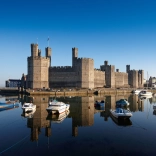
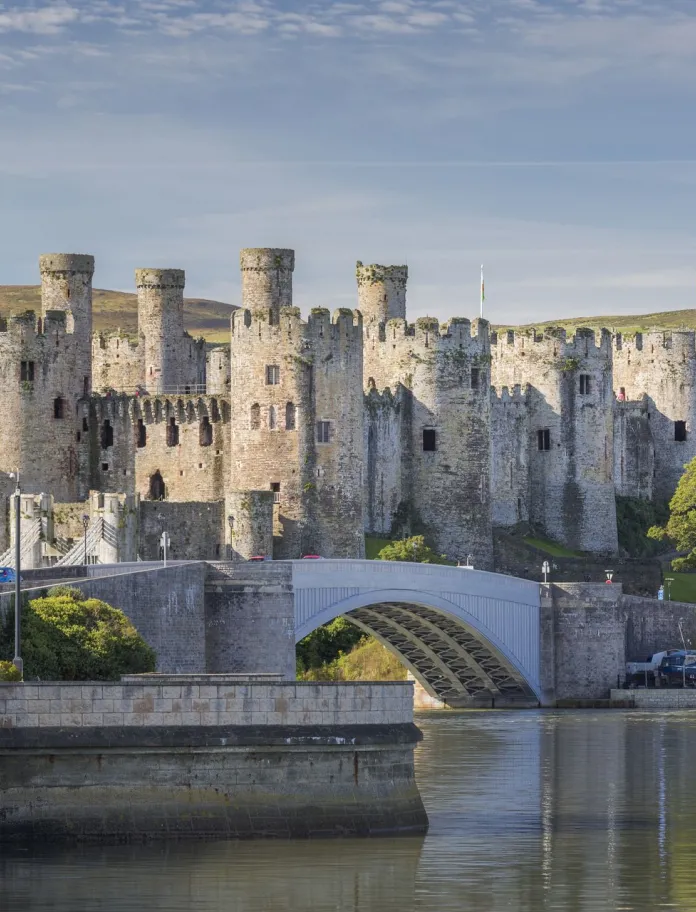
More well-preserved sites associated with Owain include Conwy Castle, which his forces supposedly captured while the English soldiers were at church, and Harlech Castle, taken by Owain in 1404 and converted into the headquarters of his rebellion.
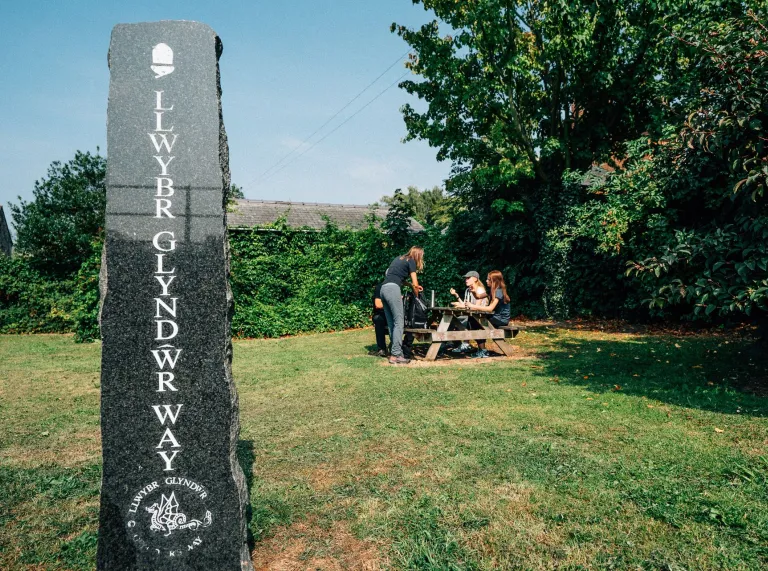
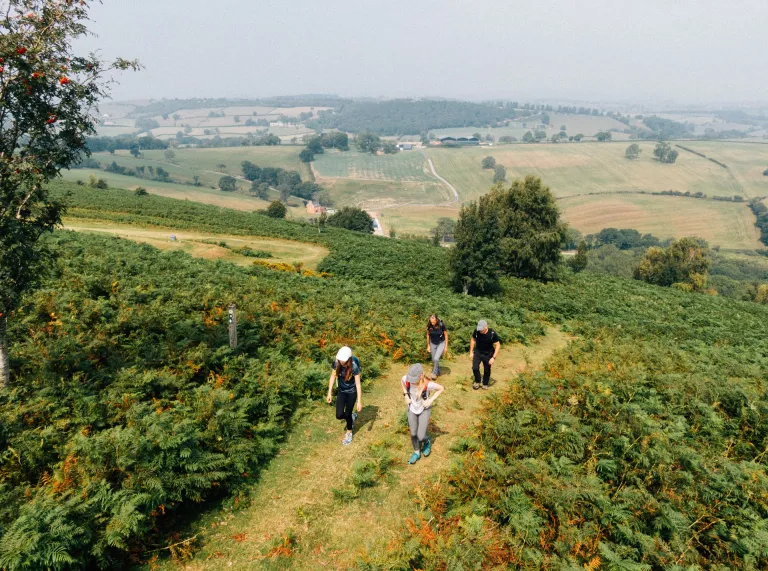
Owain also has a dedicated walking trail named after him. The 135 mile (217km) Glyndŵr’s Way crosses through a beautiful swathe of the forested hills and open moorland of Mid Wales, traversing routes Owain and his followers may once have marched through. The midpoint of the mammoth hike is the town of Machynlleth, where Owain held his parliament. Today the town is home to The Owain Glyndŵr Centre, where an exhibition offers a deep dive into the prince’s fascinating life.
So, next time you call into a Welsh pub, consider raising a glass to one of Wales’ great characters, the last native Prince of Wales, Owain Glyndŵr. Cheers!