C’est l’ordinateur monocarte (SBC) le plus vendu au Royaume-Uni, avec une large gamme d’utilisations allant de l’éducation à l’intelligence artificielle. Le Raspberry Pi s’est imposé dans les écosystèmes industriels et commerciaux du monde entier. On le retrouve dans des domaines aussi variés que la robotique ou même la Station spatiale internationale, grâce à sa technologie modulaire, légère et interchangeable.
Créé en 2008, le Raspberry Pi avait pour objectif de rendre l’informatique et la programmation plus accessibles et abordables. Sa popularité a rapidement grimpé grâce à son design simple, son faible coût et sa grande polyvalence. Des initiatives comme la Raspberry Pi Foundation ont contribué à en faire un outil éducatif incontournable pour l’apprentissage du codage, de l’électronique et de l’intelligence artificielle. En plus de son usage éducatif, il a également rencontré un immense succès auprès des passionnés et amateurs.
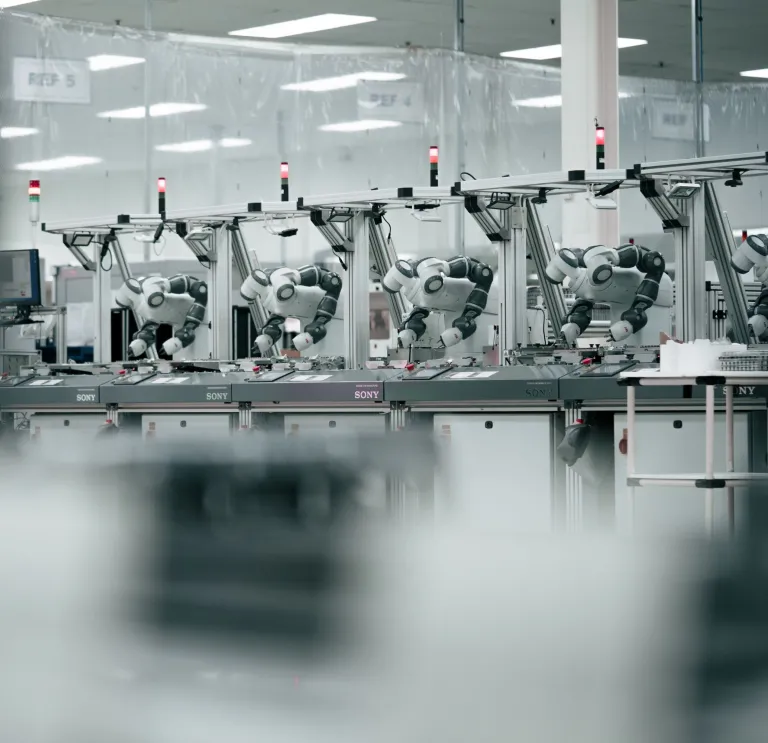
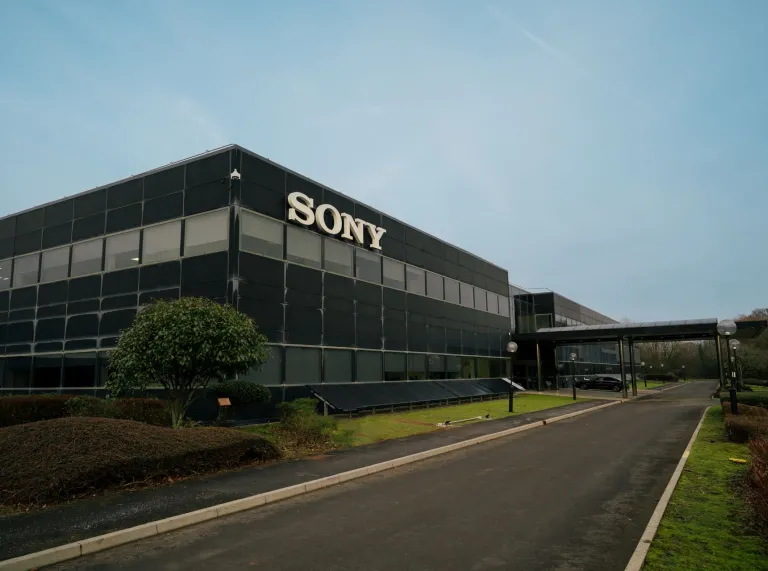
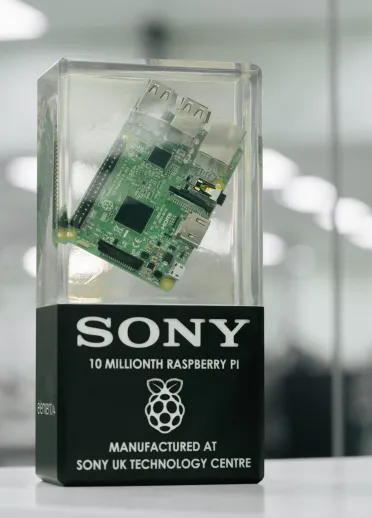
Les unités étaient initialement fabriquées en Chine, mais, en quelques mois après le lancement, la production a été transférée au Pays de Galles, grâce à un partenariat avec le Sony UK Technology Centre. Ce partenariat a débuté en 2012 et a permis, à ce jour, la fabrication de plus de 60 millions de Raspberry Pi, bénéficiant de l’expertise locale et de l’usine de pointe de Sony à Pencoed. Il s’agit d’ailleurs de l’un des partenariats de fabrication sous contrat les plus réussis du site européen de Sony, basé à Pencoed, au sud du Pays de Galles.
Bringing it back to Wales
Le Sony UK Technology Centre est basé au Pays de Galles depuis 50 ans et est reconnu comme un centre d'excellence en matière de fabrication. Il abrite également un pôle d’entreprises composé de petites et moyennes entreprises partageant les mêmes valeurs, comme Raspberry Pi. Ces entreprises bénéficient des capacités de fabrication de Sony, qui se sont développées au fil du temps pour répondre à la sophistication croissante des produits fabriqués sur le site.
Le Pays de Galles entretient une relation longue et étroite avec le Japon depuis les premiers investissements japonais dans la région dans les années 1970. Le partenariat durable entre Sony UK TEC et Raspberry Pi illustre la puissance de la collaboration, dans un environnement dynamique axé sur la résolution de problèmes, la croissance technologique et l’innovation partagée, qui continue de prospérer.
A gateway to computing
The Raspberry Pi was conceived as an affordable machine for schoolchildren and hobbyists, to spark interest in computer science and programming. While the range of models has developed and expanded greatly over the past 14 years, the Pi has stayed true to its educational roots.
The Raspberry Pi Foundation – an educational charity that aims to inspire computer literacy in young people – is still the biggest shareholder in the company. It trains teachers, creates learning resources, and oversees Code Clubs in over 100 countries. Schoolchildren even have the chance to run their programming code in space, on special Astro Pi units that live aboard the International Space Station.
However, the low cost, high performance and tiny footprint of the Raspberry Pi have also made it valuable to industry. You’ll find it embedded in all kinds of systems, from washing machines and digital printing presses to robotic production lines and underwater exploration vehicles. Most recently, the Pi has been in great demand for the latest generation of AI-powered devices.
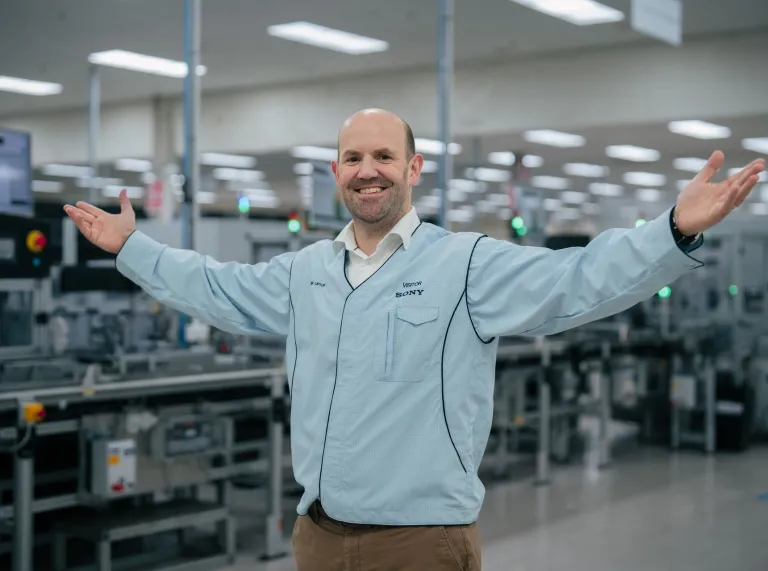
Eben still finds himself surprised and delighted at the real-world uses for his products. “They’re ubiquitous,” he says. “Go to Heathrow airport, and a Raspberry Pi is running all the display screens for passengers. Get in a Schindler lift, and the panel is run on a Raspberry Pi. And if you ever visit the Brompton bicycle factory, you’ll see every bike is put together using our systems.
“I remember once going into CNN for an interview, and all the computer screens were showing our logo. I thought they’d put it there for my benefit, but it turned out the newsroom computers were ours and were all running the Raspberry Pi operating system.”
Today’s enthusiasts, tomorrow’s engineers
Crucially, Eben and his team treat the educational and industrial markets for the Pi as complementary, rather than separate. They talk about a “virtuous circle”, in which children who cut their teeth on the Raspberry Pi become the next generation of engineers – and turn to the Pi to solve technical challenges when they reach the workplace.
Eben says: “All our graduate hires got their start on the Raspberry Pi. They were taught by teachers trained by the Foundation, and went to its afterschool clubs. They’re completely immersed in a Raspberry Pi ecosystem.
“That has benefits for our own recruitment, but it also means a lot of young people go into other organisations thinking that computing equals Raspberry Pi. We were talking to a guy at Tesla, and he said it was the one thing all their new hires had in common. That’s pretty cool, right?”
It’s a similar story at Sony UK TEC. Employees who began their engineering journey on the Pi now play a vital part in the processes to build it. What’s more, Sony has its own long-standing education programme, inviting local pupils to visit the factory, find out about hi-tech manufacturing, and take part in coding sessions using Raspberry Pi technology.
“We launched our onsite programme in 2014, and we’ve welcomed approximately 35,000 students to date,” says Ian. “We give students experience of manufacturing and inspire them to become curious about science, technology, engineering and maths. It’s a way to nurture talent here in South Wales, and support the industry professionals of the future.”
Fifty years of collaboration
Sony has been operating at Pencoed for over 30 years, but the company’s presence in Wales goes back even further. Its first factory in Bridgend began producing colour televisions in 1974. It was formally opened by the King – then the Prince of Wales – who came back to visit the Pencoed facility in 2024, marking half a century of continuous manufacturing.
Ian says: “We were part of the very first wave of Japanese investment in South Wales. Today, we’re one of more than 50 Japanese businesses here, and we’ve become an integral part of the business landscape. We’ve navigated many cultural and economic changes over the past 50 years, and the local community has been the backbone of our success.”
Today, the site employs around 550 people. They work both on Sony products and in contract manufacturing services for 10 other electronics businesses, ranging from local start-ups to multinational corporations.
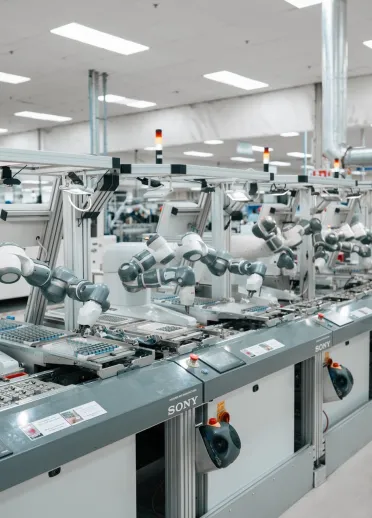
These companies are attracted by state-of-the-art automation, a skilled workforce, and a culture of continuous improvement. “We provide end-to-end solutions with speed, precision and reliability,” says Ian. “We’re equally good at producing low-volume, high-complexity products, such as our Sony broadcast equipment, and high-volume, lower-cost products like the Raspberry Pi. And we’re always happy to take on new challenges and adapt to new ideas.”
The flagship computer, the Raspberry Pi 5, is now approaching its third birthday. It’s sold alongside a variety of more specialised models, including the Pico range of tiny microcontrollers, and the ultra-low-cost Zero. One piece of Pi philosophy is to fight obsolescence by keeping older models in production – and each month, the Pencoed plant still turns out a few thousand of the original Raspberry Pi 1s for diehard enthusiasts.
As to the future, Eben’s immediate ambition is simple. “More capacity!” he says. “At the moment, we think the factory has a peak output of about 12 million Raspberry Pis a year, and we’re achieving 80 to 90% of that. We want to figure out ways to build more stuff.
“Increased capacity will mean increased employment, which will be exciting. We’ll produce a new Raspberry Pi 6 at some point, and future generations of our semiconductor products. We can’t rest on our laurels. We need to push, push, push – push volume, push capability, and stay hungry!”