Es el ordenador de placa única (SBC) más vendido del Reino Unido, con una amplia variedad de usos que van desde la educación hasta la inteligencia artificial. El Raspberry Pi se ha integrado en los ecosistemas industriales y comerciales de todo el mundo, y puede encontrarse en aplicaciones que van desde la robótica hasta la Estación Espacial Internacional, gracias a su tecnología modular, ligera e intercambiable.
Creado en 2008, el objetivo del Raspberry Pi era hacer que la informática y la programación fueran más accesibles y asequibles. Su crecimiento en popularidad se debió al diseño sencillo, su bajo coste y la versatilidad del dispositivo. Iniciativas como la Raspberry Pi Foundation han consolidado al SBC como la herramienta educativa de referencia para la codificación, la electrónica y la inteligencia artificial. Además de su uso en educación, también ha tenido un enorme éxito entre entusiastas y aficionados.
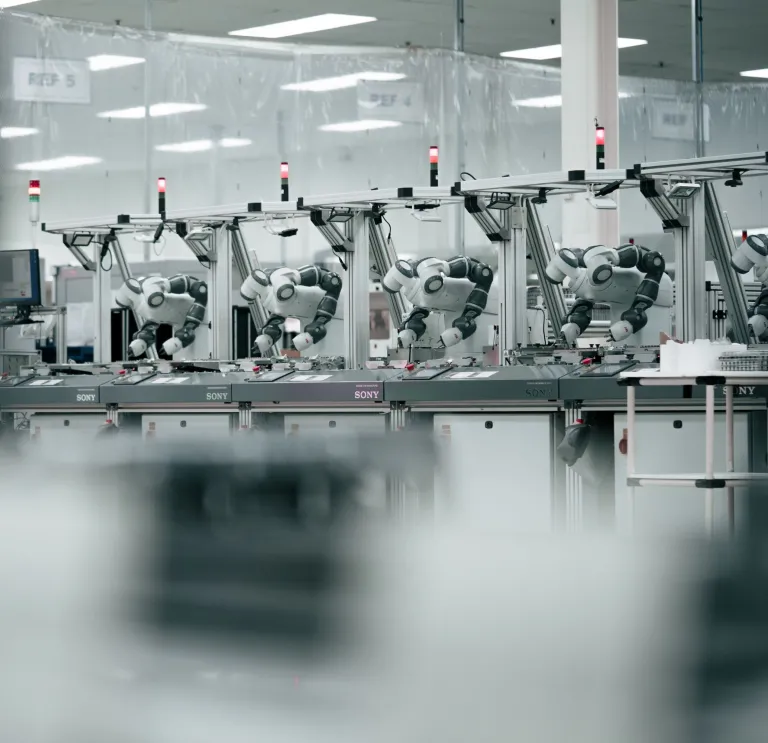
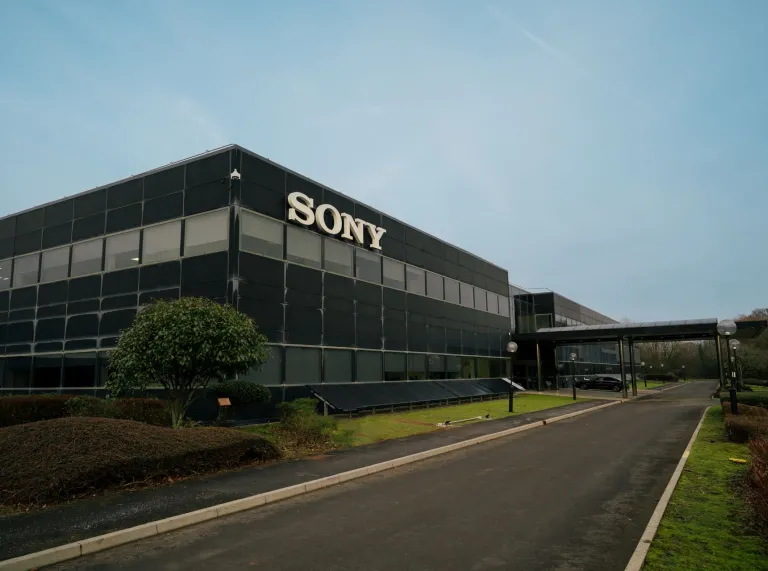
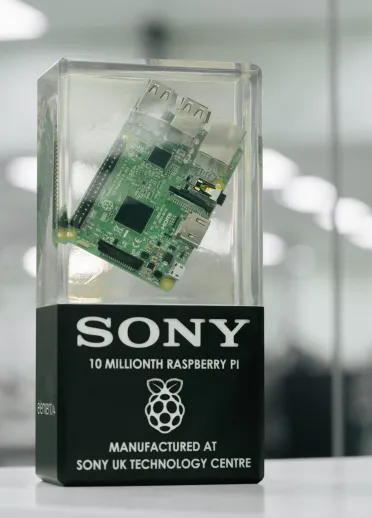
Las unidades se fabricaban originalmente en China, pero a los pocos meses del lanzamiento, la producción se trasladó a Gales, gracias a una colaboración con el Sony UK Technology Centre. Esta colaboración comenzó en 2012 y, hasta la fecha, ha producido más de 60 millones de unidades de Raspberry Pi, beneficiándose de la experiencia y las modernas instalaciones de fabricación de Sony en Pencoed. De hecho, es una de las colaboraciones de fabricación bajo contrato más exitosas del sitio europeo de Sony, ubicado en Pencoed, en el sur de Gales.
Bringing it back to Wales
El Sony UK Technology Centre ha estado establecido en Gales durante 50 años y es conocido como un centro de excelencia en fabricación. También alberga un centro empresarial compuesto por pequeñas y medianas empresas con ideas afines, como Raspberry Pi. Estas empresas se benefician de las capacidades de fabricación de Sony, que han evolucionado con el tiempo para adaptarse a la sofisticación de los productos que allí se producen.
Gales mantiene una relación larga y estrecha con Japón desde las primeras inversiones de empresas japonesas en los años 70. La duradera colaboración entre Sony UK TEC y Raspberry Pi destaca el poder del trabajo conjunto, en un entorno dinámico de resolución de problemas, crecimiento tecnológico e innovación compartida que sigue prosperando.
A gateway to computing
The Raspberry Pi was conceived as an affordable machine for schoolchildren and hobbyists, to spark interest in computer science and programming. While the range of models has developed and expanded greatly over the past 14 years, the Pi has stayed true to its educational roots.
The Raspberry Pi Foundation – an educational charity that aims to inspire computer literacy in young people – is still the biggest shareholder in the company. It trains teachers, creates learning resources, and oversees Code Clubs in over 100 countries. Schoolchildren even have the chance to run their programming code in space, on special Astro Pi units that live aboard the International Space Station.
However, the low cost, high performance and tiny footprint of the Raspberry Pi have also made it valuable to industry. You’ll find it embedded in all kinds of systems, from washing machines and digital printing presses to robotic production lines and underwater exploration vehicles. Most recently, the Pi has been in great demand for the latest generation of AI-powered devices.
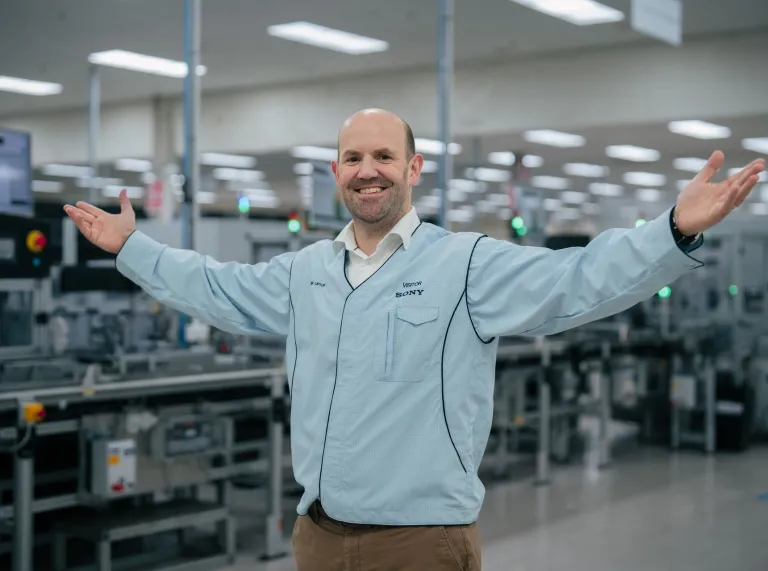
Eben still finds himself surprised and delighted at the real-world uses for his products. “They’re ubiquitous,” he says. “Go to Heathrow airport, and a Raspberry Pi is running all the display screens for passengers. Get in a Schindler lift, and the panel is run on a Raspberry Pi. And if you ever visit the Brompton bicycle factory, you’ll see every bike is put together using our systems.
“I remember once going into CNN for an interview, and all the computer screens were showing our logo. I thought they’d put it there for my benefit, but it turned out the newsroom computers were ours and were all running the Raspberry Pi operating system.”
Today’s enthusiasts, tomorrow’s engineers
Crucially, Eben and his team treat the educational and industrial markets for the Pi as complementary, rather than separate. They talk about a “virtuous circle”, in which children who cut their teeth on the Raspberry Pi become the next generation of engineers – and turn to the Pi to solve technical challenges when they reach the workplace.
Eben says: “All our graduate hires got their start on the Raspberry Pi. They were taught by teachers trained by the Foundation, and went to its afterschool clubs. They’re completely immersed in a Raspberry Pi ecosystem.
“That has benefits for our own recruitment, but it also means a lot of young people go into other organisations thinking that computing equals Raspberry Pi. We were talking to a guy at Tesla, and he said it was the one thing all their new hires had in common. That’s pretty cool, right?”
It’s a similar story at Sony UK TEC. Employees who began their engineering journey on the Pi now play a vital part in the processes to build it. What’s more, Sony has its own long-standing education programme, inviting local pupils to visit the factory, find out about hi-tech manufacturing, and take part in coding sessions using Raspberry Pi technology.
“We launched our onsite programme in 2014, and we’ve welcomed approximately 35,000 students to date,” says Ian. “We give students experience of manufacturing and inspire them to become curious about science, technology, engineering and maths. It’s a way to nurture talent here in South Wales, and support the industry professionals of the future.”
Fifty years of collaboration
Sony has been operating at Pencoed for over 30 years, but the company’s presence in Wales goes back even further. Its first factory in Bridgend began producing colour televisions in 1974. It was formally opened by the King – then the Prince of Wales – who came back to visit the Pencoed facility in 2024, marking half a century of continuous manufacturing.
Ian says: “We were part of the very first wave of Japanese investment in South Wales. Today, we’re one of more than 50 Japanese businesses here, and we’ve become an integral part of the business landscape. We’ve navigated many cultural and economic changes over the past 50 years, and the local community has been the backbone of our success.”
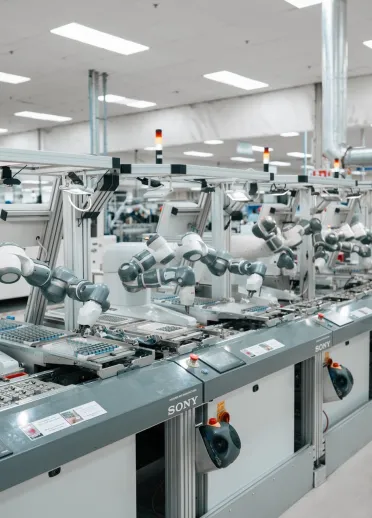
Today, the site employs around 550 people. They work both on Sony products and in contract manufacturing services for 10 other electronics businesses, ranging from local start-ups to multinational corporations.
These companies are attracted by state-of-the-art automation, a skilled workforce, and a culture of continuous improvement. “We provide end-to-end solutions with speed, precision and reliability,” says Ian. “We’re equally good at producing low-volume, high-complexity products, such as our Sony broadcast equipment, and high-volume, lower-cost products like the Raspberry Pi. And we’re always happy to take on new challenges and adapt to new ideas.”
The flagship computer, the Raspberry Pi 5, is now approaching its third birthday. It’s sold alongside a variety of more specialised models, including the Pico range of tiny microcontrollers, and the ultra-low-cost Zero. One piece of Pi philosophy is to fight obsolescence by keeping older models in production – and each month, the Pencoed plant still turns out a few thousand of the original Raspberry Pi 1s for diehard enthusiasts.
As to the future, Eben’s immediate ambition is simple. “More capacity!” he says. “At the moment, we think the factory has a peak output of about 12 million Raspberry Pis a year, and we’re achieving 80 to 90% of that. We want to figure out ways to build more stuff.
“Increased capacity will mean increased employment, which will be exciting. We’ll produce a new Raspberry Pi 6 at some point, and future generations of our semiconductor products. We can’t rest on our laurels. We need to push, push, push – push volume, push capability, and stay hungry!”